































Journalism establishes a physical presence


We sped the industry up so fast that we left people behind.
Speed made sense for a long time. Journalism is built on getting scoops, breaking news, being first, the first draft of history. Then digital publishing offered more space, more platforms, more stories, more measurable clicks. That velocity helped grow an audience, but it also shifted where journalists were asked to spend their time and what they think about when they publish.
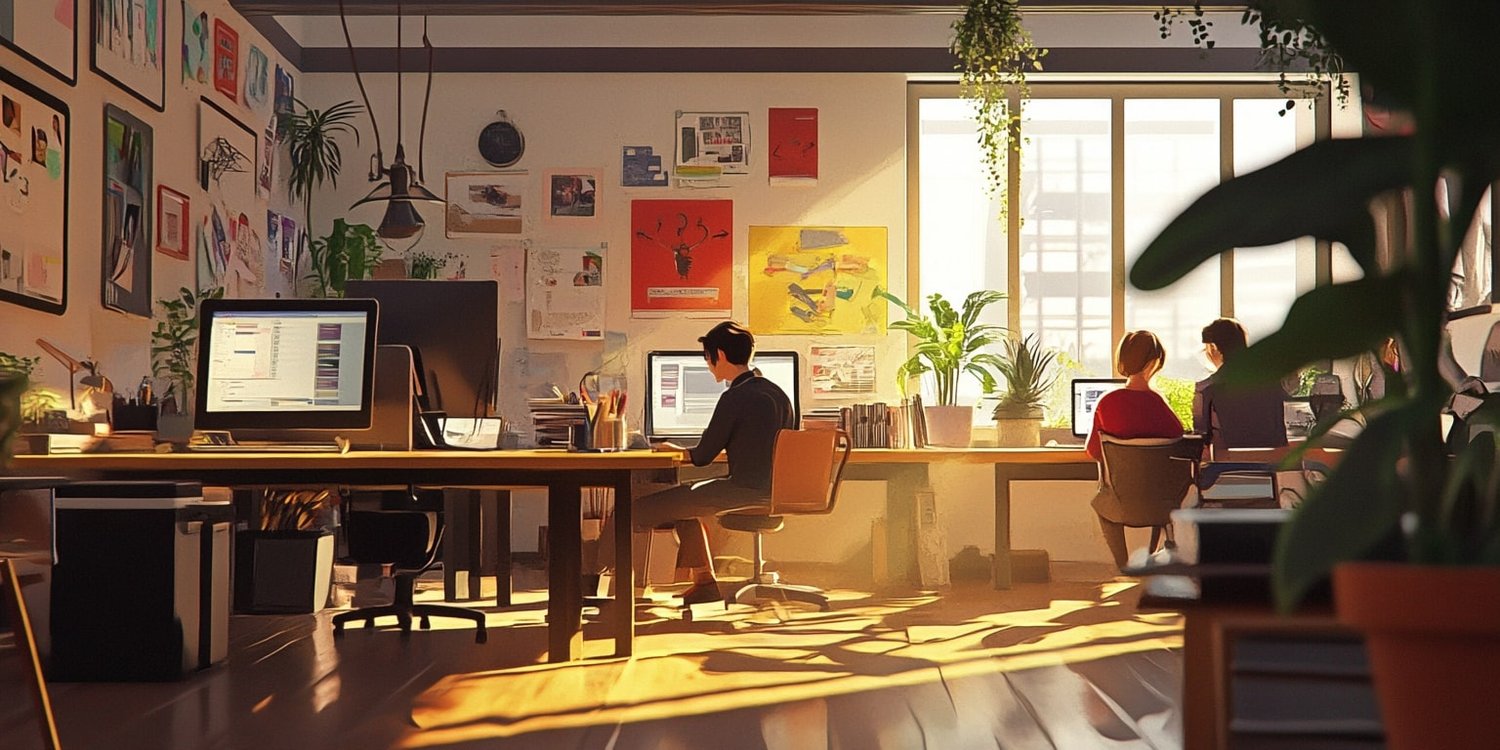
As this model shows its limits, 2026 will push us back toward the physical and tangible in the spaces we work, the ways we engage, and the products we create.
Chasing growth pulled us toward rapid-fire media production and away from the actual people we speak to. Information became everywhere and, paradoxically, somehow nowhere. Social media, and now AI, have increased the volume of content and scrambled its inherent value, whether it’s news or anything else. As the demand for content intensified, something important slipped away with it.
I’ll simply call it the act of being there.
At the same time, newsrooms shrank. Beats disappeared, coverage areas widened, and the jobs that rely on closeness and proximity, like going to community gatherings, became harder to sustain. The work that depends on a sustained and committed physical presence was the first to go, and that loss shapes the precarious moment we are in now.
Today, we can see how much physical space matters. As tangible information becomes harder to find, the places where people gather become essential. Small, community-driven physical journalism carries renewed meaning because it reconnects with the rooms and routines where people already get together.
We are not heading back to an era of a print product or reaching for nostalgia. The work now is about physical presence and how shared spaces can bridge informational and social gaps.
People still gather in libraries, parks, churches, laundromats, and community rooms. They still talk to neighbors. They still look for one another. Journalism, however, drifted away from where people actually live their lives. We built for content rather than contact, reach rather than relationship. In the process, we stepped out of the rooms where people still gather every day. That absence is the distance we’re feeling now.
When we invite people in and design work that depends on real interaction, we tap into conditions that have been sitting in plain sight. And when journalism collaborates with institutions that already bring together communities, especially libraries, this work becomes possible in a new, novel way. If speed leaves people behind, maybe a deliberate and intentional “slowness” can bring them together.
Physical work once helped create this connection. When the physical artifact disappeared, journalism lost a civic rhythm and a public face. The daily ritual of visibility was gone: delivery drivers, newspaper bins, the churn of a newspaper or newsletter made today that would be made again tomorrow. Even so, a printed object still carries a civic signal. It says, “This place exists and someone cared enough to make it.”
To see where we are going, it helps to look back. The New York City Housing Authority’s tenant-led newsletters, which started as early as the 1940s and operated through at least the 1980s, show what this kind of journalism can be. Residents across public housing developments produced hyperlocal publications about daily tenant life. They made the work together, in public view, in shared spaces. NYCHA supported this work with training, a field guide, and an annual awards ceremony that treated the newsletters like real, professionally produced journalism. It gave residents structure, recognition, and continuity, the ingredients that help people feel confident documenting their own world.
When you read how NYCHA described the work, it becomes even clearer. This quote from Housing Authority member Blanca Cedeno, who at the time was serving as the agency’s vice chairperson, appeared in a press release from the 1970s:
“As the ‘eyes’ and ‘ears’ of communities which don’t nearly often enough get the kind of attention they deserve from the major media, you define and articulate the deepest concerns of your neighbors. To us, this ceremony is fully as important as the annual Pulitzer Prize awards and you, no less than a foreign correspondent or a Walter Cronkite, are worthy members of the greatest press corps in the world.”
Jump forward 50 years. A project I started, the Library Newsroom Project, stems from this same lineage. It takes some of the core principles of the NYCHA newsletter, such as creators being in close proximity, civic journalism being structured as a professional newsroom would, and shared co-production, and brings them into a space that still exists in nearly every community — the public library.
Libraries carry a public mandate that makes this kind of shared work easier to build and sustain. These are places where people arrive with questions, ideas, memories, dreams, and hopes. People already gather there to solve problems, learn skills, and connect with their neighbors. When you place journalism inside this environment, it can function as a public utility again. A table, a whiteboard, and a few open chairs can turn your library into a newsroom that people can inhabit. It becomes a modern version of what those tenant newsletters showed decades ago: journalism created in common view, with and for the people who live there.
More journalists, editors, organizations, and funders are recognizing that publishing and re-publishing news as content on its own falls short. Our role now includes helping residents make sense of what is happening around them, supporting communities as they connect and widening the boundaries of what journalism can be.
As our need for physical connection grows, collaborations with civic spaces will increase. Libraries in particular will become equal partners in building new forms of journalism. We will see more “community-co-created” publications and more experiments rooted in places where people already gather, not in virtual meetings or digital feeds. Large national media outlets may not take this on. But organizations of all stripes that listen to their communities, hold themselves accountable for their content decisions, build relationships with their audiences, and connect with people in long-term, committed ways will see it differently. So will the thousands of towns, neighborhoods, and library branches where people still want to find one another.
There is an intentional slowness to this work, a kind of “slow journalism.” It brings to mind Michael Luo’s 2019 New Yorker piece, where he wrote that the nonstop flow of digital content leaves people “more aware” but “less informed.” Volume replaced understanding. That tension has only grown, which is why 2026 needs to pull journalism back into real rooms with real people.
After a decade defined by feeds and constant consumption, 2026 becomes a year of shared presence. Older forms feel new because they restore human rhythms that digital life pushed aside. The most interesting journalism in the coming year will not be the quickest. It will be slower, more present, and more rooted in the people who live there and the places where life happens.
Terry Parris Jr. is a 2026 John S. Knight Journalism Fellow at Stanford.
What's Your Reaction?
 Like
0
Like
0
 Dislike
0
Dislike
0
 Love
0
Love
0
 Funny
0
Funny
0
 Angry
0
Angry
0
 Sad
0
Sad
0
 Wow
0
Wow
0