









































Newsrooms build the muscle to survive many futures at once


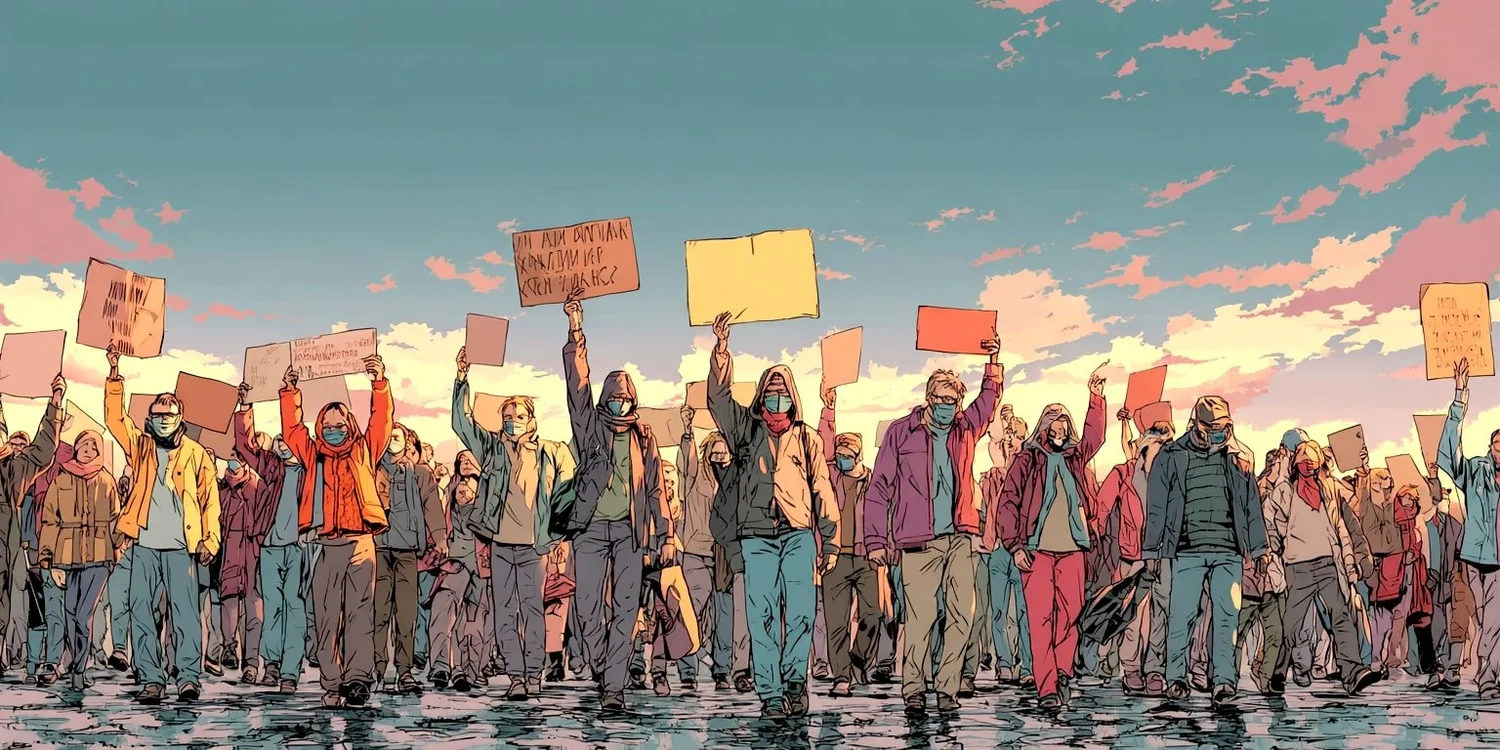
In the coming year, the newsrooms that thrive won’t be the ones chasing the next platform change, algorithm tweak, or business model that might save us. They will be the ones preparing for multiple realities at once, with focus, steadiness, and a plan.
My prediction is simple: Scenario planning — done consistently, cross-functionally and proactively — will become a core newsroom discipline.
I’ve spent the past year leading this work at The 19th, where operational resiliency and safeguarding the organization are core strategic priorities. What began as a protection strategy became something deeper: a new way of operating that brings stability in a wildly unstable environment.
Scenario planning forces a different, and far more useful, question. Not “What do we think will happen?” but “What will we do if it does?“
We started small: a set of workshops with our senior leadership team. Then we expanded to our board and our full staff. We identified more than a dozen high-risk scenarios — from losing our 501(c)(3) status to major platform changes to legal and safety threats. For each risk, we mapped outcomes, identified triggers, and named what we needed to do now and in real time.
The result wasn’t fear or anxiety. It was clarity and alignment.
This work strengthened our operational backbone. We invested in the infrastructure this work requires: upgraded insurance, legal support, digital and physical safety training, security tools, financial modeling, and more. We made scenario planning a regular practice, not just a one-time exercise. At the heart of this work is our crisis philosophy that defines how we show up in the critical moments: anchored by our journalism, accountable to our audiences, and guided by our values.
This is the value of scenario planning: It becomes a mirror. It shows where you’re strong and where you’re vulnerable. It reveals overreliance on individuals rather than on durable systems. It builds muscle memory so that the organization can act decisively rather than scramble.
To be sure, newsrooms have adopted versions of this, often in moments of crisis. But the world we’re operating in now demands more. A single platform policy change can gut an audience strategy overnight. A lawsuit can reshape a newsroom’s future. A safety incident can destabilize a team. And misinformation can outrun the truth in minutes. We can’t predict every disruption, but the newsrooms that thrive will treat resiliency as core infrastructure, something as essential as a CMS upgrade or fundraising strategy.
Scenario planning offers a practical framework for doing exactly that. It gives newsroom leaders a way to map risk, make decisions ahead of time, build stability for their teams, and maintain trust with their audiences, even during turbulent moments.
The future won’t get less volatile. But our preparedness can get stronger.
LaSharah S. Bunting is vice president at The 19th.
What's Your Reaction?
 Like
0
Like
0
 Dislike
0
Dislike
0
 Love
0
Love
0
 Funny
0
Funny
0
 Angry
0
Angry
0
 Sad
0
Sad
0
 Wow
0
Wow
0