




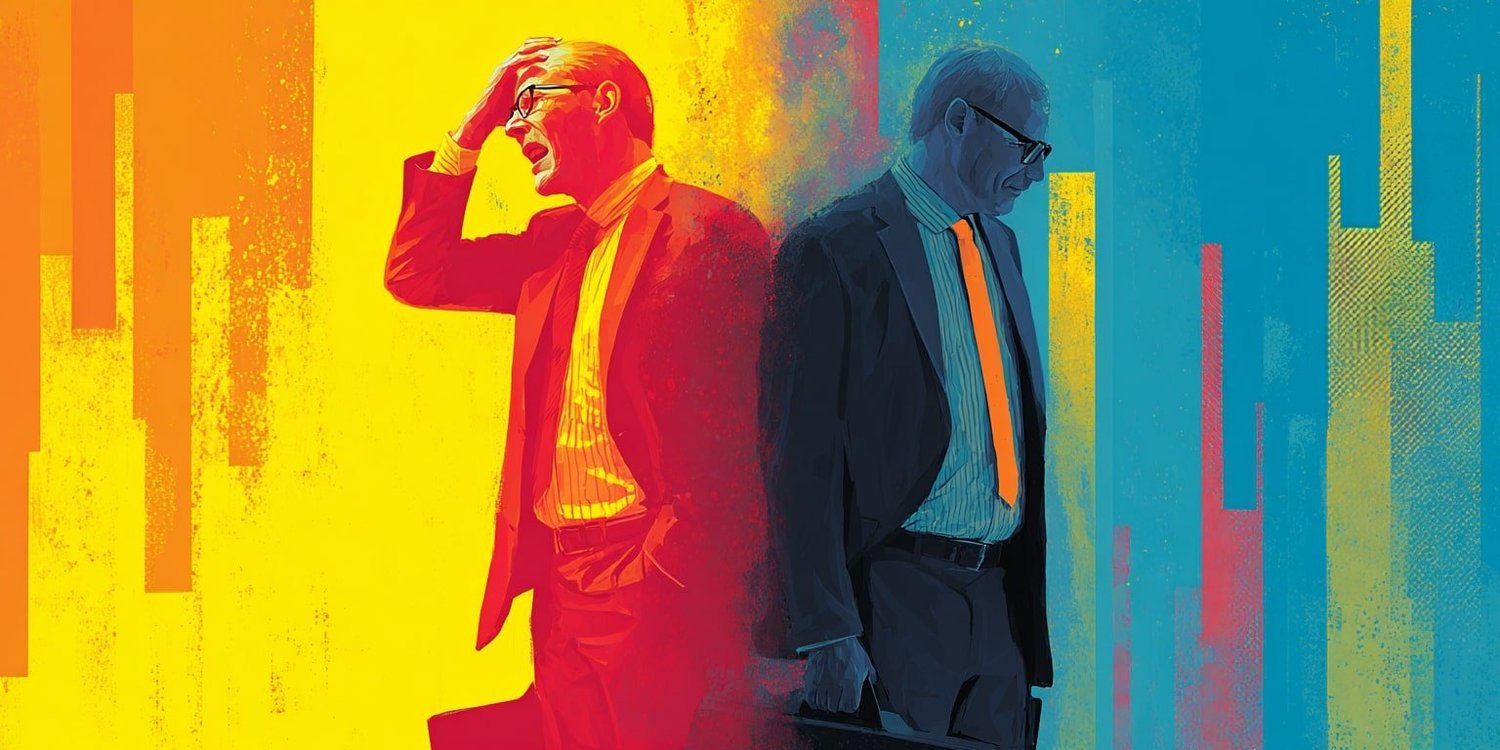























The golden age wasn’t so golden


Last month, Routledge published Mainstream News Media Trust: Antecedents, Consequences, and Remedies, a new book edited by Nayla Fawzi, Jesper Strömbäck, and Yariv Tsfati. It aims to “to analyze and take stock of what we currently know and what we don’t know about the concept of news media trust.” The entire book is available free online, but here’s a particular chapter worth your attention, by the media scholar Michael Schudson, with the unexpected title “Three Cheers for Declining Trust in the News Media.”
People have felt grave doubts about the press long before the Internet or social media, at times when politics was polarized and at times when it was not. In the United States, the steady decline in media trust from 1970 and onwards has, in my opinion, been badly misread. It has produced or justified anxiety about what we have come to call “the media” among journalists and pundits alike.
In the same era (1970–present) when measured trust in most American institutions has declined, leading news institutions have undergone a dramatic transformation whose reverberations have yet to be fully acknowledged — even by journalists themselves. Dissatisfaction with journalism inside journalism and outside grew in the 1960s. What came to be widely acknowledged as either “he said, she said” journalism or “false balance” journalism or “bothsidesism” has been the object of sharp, even derisive, and ultimately potent critique. As multiple scholars have documented, news since the 1960s has become deeper, more investigative, and more likely to take “holding government accountable” or “speaking truth to power” to be essential goals. In these past six decades, mainstream media not only continued to be fact-centered and verification-oriented but also guided by a more explicit avowal of the public service function of holding government accountable, just as important a value as the ideal of “objectivity” itself.
There is a large literature on the question of trust in the media, some of it very rich and carefully done, including work by the editors of (and other contributors to) this volume.1 2 3 4 At the same time, there is a kind of romantic — or just plain mythical — nostalgia for a media past that never was and that in a democracy never should have been. In this chapter, I will illustrate two bits of mythology — one about the founding era of the United States and one about the highly trusted media of the 1950s and 1960s. Both are clearly errors that should be flushed out if we are to arrive at a clear-minded assessment of the media skepticism that so many bemoan today.
The first myth
The first myth is wonderfully illustrated by something that historians of the founding era have long known but that I only learned quite recently. Journalists at ceremonial occasions celebrate the First Amendment of the Constitution as “first for a reason.” One example is Jill Abramson when she was executive director of The New York Times.5 And that reason? The reason, they say, is that the founders recognized free speech and notably a free press as fundamental to the republic they were building. And why? Obviously (to us) because the press is crucial to holding power to account. What’s wrong with this story?
What seems to have been largely forgotten is that the first ten amendments to the U.S. Constitution, widely known as “the Bill of Rights,” originally were 12 amendments that the young Congress sent to the states for ratification. In that group of 12, what we know as the First Amendment was third. However, the first two amendments were rejected, not ratified. One concerned the population size of congressional districts and the other pronounced that Congress could not award itself pay raises until after a subsequent election. So “freedom of religion, of speech, and of press” were not “first for a reason.” They were first by accident!6 Also important is that the newspapers the founders were acquainted with did little or no original reporting. They were still republishing news items shipped from Europe for much of their content, and they ran many voluntary contributions from readers. They were often outspoken, including criticism of President Washington and subsequent presidents, but they were issued by a printer from his print shop, managed by himself and a few apprentices. There was no newsroom. There were few or ordinarily no people hired to “report” the news. I have great respect for the authors of the U.S. Constitution, but they did not recognize newspapers as fundamental units of the republican government (the founders had contempt for “democracy” as such, because they believed an elected government was too likely to descend into mob rule).
The second myth
The second and even more important mythological point is that a better moment in the history of U.S. journalism was the period of greater trust — presumably the 1950s and 1960s — from which era trust in the media has sadly descended.
But should we accept that the decline in trust in the media is sad? Let me begin here with a question, rarely considered in the “declinist” presumption around us: How much trust should there be in a healthy constitutional democracy? To telegraph my position: I think there was far too much trust or general public complacency about the practices of journalism in the pre-Vietnam, pre-civil rights movement, pre-Watergate, pre-women’s liberation, pre-Stonewall era.
Consider, for example, the results that journalist and media critic Carl Sessions Stepp7 found when he compared ten metropolitan daily newspapers from 1963 to the same papers in 1999. He judged the 1963 papers “naively trusting of government, shamelessly boosterish, unembarrassedly hokey and obliging,” and he found himself particularly surprised to find stories “often not attributed at all, simply passing along an unquestioned, quasi-official sense of things.” In the “bothsidesism” style of news, still dominating newspapers in 1963, quoting one party to a dispute or an election contest and then quoting the other was the whole of the reporter’s obligation. Going behind or beyond the statements of the quoted persons, invariably elite figures, and appointed or elected political officials was not required. It was particularly in the work of investigative reporters in the late 1960s and 1970s that reporters became detectives seeking documentable evidence to confirm a view of the reality of recent events they were pulling together. Later, as digital tools for reporters emerged, the capacity to document and to investigate expanded, and a reporter did not require the extravagant resources of a New York Times newsroom to be able to write authoritative stories.
The anxiety among journalists that the public no longer trusts them reflects a reality that public opinion polls support — trust in the mainstream media has been in decline since about 1970. But something else has changed in the same period from the late 1960s forward: journalism. Journalism became less a reproduction or representation of the opinions of political office-holders — and more an independent-minded journalism free and indeed eager to criticize people in power. The public learns more than it used to about failings of governments and governmental officers and infers more regularly and readily and with more apparent justification that government (and other powerful institutions) should not be trusted. While trust in the media may be unhealthily low today, it was surely unhealthily high in the 1950s and early 1960s. To put it too simply, U.S. journalism shifted from what I will call a collusional (if there is such a word) press in which reporters protected politicians — both Republicans and Democrats — in exchange for politicians’ accepting them into their elite circles.8 9 What the media became in the 1970s and after was more independent-minded, critical (of both Democrats and Republicans), more investigative, and more enterprising than the journalism of the 1950s.10 11
This chapter focuses on developments in the United States but they are paralleled elsewhere in the world. See, for instance, the study by Esser and Umbricht12 that examines the media systems of six different Western nations. At the same time, investigative reporting not only expanded greatly in various countries around the world but also internationalized with cooperative ventures like the International Consortium of Investigative Reporting (ICIJ). This and other international efforts (including the spread of dedicated “fact-checking” organizations) have advanced the complexity, ambition, and relative independence of journalism globally.13
Journalism Past was far less balanced through a societal narrowness of who gets covered than Journalism Present. The journalism of the 1940s, 1950s, and early 1960s was less “fair and balanced” journalism in its faith in political insiders, omitting from consideration altogether the concerns and voices of a variety of social groups that lay outside narrow assumptions about who counts as “the public” that journalism is supposed to serve. The so-called mainstream media could reasonably have been called the “white media” or even the “white heterosexual male media” — or, worse still, the white heterosexual male media with a dangerously oversimplified understanding of what counts as a democratic society. That, at any rate, is the path I propose in this chapter.
When trust was too high: Collusional journalism
People often recall — or think they recall — that long-time CBS News television anchor Walter Cronkite was in his day “the most trusted man in America.” If you Google that phrase (as I did on October 11, 2021, and again on October 11, 2025) you immediately come up with Walter Cronkite. Why? Because a public opinion poll in 1972 asked respondents which of the leading political figures of the day they trusted most. Cronkite’s name was thrown in as a kind of standard of comparison — how do any and all of the politicians compare to some well-known and well-regarded non-political figure? Seventy-three percent of those polled placed Cronkite as the person on the list they trusted most, ahead of a general construct — “average senator” (67%), and well ahead of the most trusted of the politicians, Senator Edmund Muskie (61%). Chances are that any other leading newsperson, or probably a movie star or athlete, would have come out as well or better than Cronkite. In other words, the main reason Cronkite was “most trusted” is simply that he was the only non-politician among the persons listed in the poll.14
So the notion that Cronkite was unusually “trusted” is a phantom best forgotten. Somehow, people have wanted to believe that somewhere, just before all the ruckus began over civil rights and Vietnam and uppity women and the heroes of “Stonewall” who brought on a new, public self-respect for lesbians and gays and other people of non-standard sexual identities, at some time just the day before yesterday, the media had been a pillar of central, neutral, moderate, unquestioning Americanism. It ain’t so.
When Democratic presidential candidate Adlai Stevenson ran in 1952, he railed against what he called the “one-party press” — a Republican press, that is, and certainly he was right if you looked at the corporate ownership of the country’s newspapers, their antagonism toward Franklin Roosevelt and the New Deal, and their overwhelming editorial-page support for Republican candidates. If you go back very much further than the 1940s, you reach a moment when “trust in the media” would have been an incomprehensible phrase. News outlets were understood to be and understood themselves to be advocates for one party or the other, not neutral truth-tellers. Readers trusted their own favored paper and distrusted the others.
In common parlance, there was no “news media” or “mainstream media.” There was “the press” and that, Richard Nixon decided in his presidential years, was too cozy and familiar a term. Journalists were, in his estimation, united against him — and he was not entirely wrong. Journalists went gaga about Jack Kennedy, bowled over in the 1960 campaign and the early days of the Kennedy administration by the charm of Kennedy, his wife Jackie, and his good-looking family. Nixon was a respected figure in Washington, but far from beloved, and certainly not charming, and he never got over the resentment he felt about journalists’ swooning over Kennedy.
Things would only get worse after Nixon became president. He felt aggrieved by journalists and the idea that they were biased against him led him to plan strategically to muddy their reputation. To refer to journalists as “the press” ceded them an emotional upper hand, an aura of rectitude armed with First Amendment privilege. Nixon judged that aura an unacceptable advantage and urged his staff to use the term, “the media.” William Safire, the public relations professional who became a speechwriter for Nixon, recalls in his memoir, “The press became ‘the media’ because the word had a manipulative, Madison Avenue, all-encompassing connotation, and the press hated it.” Nixon judged journalists to be his dedicated opponents, Safire recalls, and reports that he personally heard Nixon declare to his staff that “the press is the enemy” at least a dozen times.15
There was a moment, beginning in the late 1950s, when watching the television networks became part of everyday life for most Americans, however soporific those shows could be. This may have been the beginning of something called “the media.” Until then, Americans would have been hard put to identify a Thing that today people recognize as “the mainstream media.”
The full entrance of “the media” into the American vocabulary arrived at about the same moment as distrust in the media intensified — but in a one-sided fashion. Barry Goldwater and his supporters, in his 1964 campaign for the presidency, were convinced that the media, notably the three major television news networks, were deeply biased against the Republican candidate.16 Nixon’s later effort to make “the media” rather than “the press” the more common term for journalism may or may not have made a difference, but it was indicative that “the media” was something of a novelty for Americans and one that, early on, Republicans found more threatening than did Democrats.
Too often these days, low trust in the media is linked to some feature of the digital age — it’s an Internet problem or a Facebook problem or a Twitter problem or a generalized social media problem. Social media, after all, offer a microphone to individuals who want to promote any old picture of reality, no matter how lunatic, that suits either their politics or their crackpot sense of humor. This may well contribute to distrust of any and all assertions coming from unknown entities beyond our immediate social circles. But sharply declining trust in the media, as the academic literature clearly demonstrates — going back notably to Ladd’s detailed and thoughtful Why Americans Hate the Media.17 It predates George W. Bush and his unnamed adviser, who in 2004 spoke sneeringly to the New York Times Magazine of journalists as “the reality-based community”.18 It precedes the rise of Donald Trump, and it precedes social media. A full-bodied sense of “the media” as a powerful — and dangerous — social and political force found its voice before the digital era.
What has not become part of the common understanding is how dramatically journalism changed in the decades just prior to the Internet. The most significant change in American journalism between the 1950s and the early 2000s has been the rise of a more aggressive, more independent, more evidence-based, and more interpretive journalism. Various historians, social scientists, and journalists have documented these changes.19 With Katherine Fink, I have added to this literature, too.20 In what Fink and I have called “contextual reporting,” the journalist’s work is less to record the views of key actors in political events and more to analyze and explain them. More than other concurrent changes, this one altered the front page, and in a way that put a premium on the story or stories behind the story. The move from writing down what political leaders said to contextualizing what they said and did, and why, offered a new model of journalism. This is also reflected in the changing role conceptions of U.S. journalists for whom the importance of acting as a watchdog has steadily increased, particularly since the 1980s.21 In consequence, studies have shown that an increasing negative depiction of politicians did go hand in hand with a decline in public confidence ratings of the press, described as “killing the messenger-effect”.22
The new model seeped into the work of journalism with little fanfare. Journalists continued to defend their work as “objective” or “balanced” while, in practice, transforming what they meant by such terms. Fink and I found that in 1955, in the Washington Post, New York Times, and Milwaukee Journal, 85% of front-page stories were conventional who-what-where-when stories and 9% contextual. Focus on that first figure and track it through succeeding years: in 1955, 85% of all front-page stories were conventional who-what-where-when stories; in 1967, 79%; in 1979, 60%; in 1991, 51%; and by 2003, 47%. In 2003, then, 52% of front-page stories were contextual reporting, a percentage about six times greater than what it had been in 1955. This shows that contextual journalism emerged as a powerful and prevalent companion to conventional reporting. The news media became an institution to reckon with as never before, and not because news organizations had political agendas of their own — although sometimes they did — but because they had attained a preeminent role in civil society as a monitor of government action, the cardinals of accountability for American democracy.
This does not mean that all was well with American journalism by the 1990s, but it does mean that concern that the news media have fallen from the great days of Ida Tarbell or the great days of Woodward and Bernstein has been overdone. The Ida Tarbell days of muckraking lasted just a few years and never extended very far beyond a handful of middle-class national magazines; “muckraking” as Teddy Roosevelt derisively labeled it at the time, really didn’t influence the daily press. And when Woodward and Bernstein, more than half a century later, broke open the Watergate story, it would be months before any other news organization assigned reporters to the story. Investigative reporting a la Woodward and Bernstein did come to have some influence beyond the Washington Post, but it has never been a quantitatively significant part of any news organization’s budget or time on the air or space on the page, at least, not until the establishment of ProPublica (founded in 2007) and other substantial online news organizations that devote themselves primarily to investigative reporting.
What did change, and it changed in a major way, was a move from who-what-when-where reporting to analytical “how” and “why” reporting, often focusing on a broader time frame than the past 24 hours, offering a context for the story at hand.
People of an ardent conservative persuasion judge the media to be very liberal; people of powerfully liberal convictions find the media to be pawns in the hands of conservatives. This is a familiar enough phenomenon to have acquired a name in social psychology — the “hostile media effect”.23 The familiar response of journalists has been that “we must be doing our job right if we have offended people of extreme views both left and right.”
The evidence is clear that in the 1940s, 1950s, and into the late 1960s, there was a chumminess among leading politicians and public officials and the reporters who covered them. What is not as well known is that this boys’ club atmosphere (there were women journalists and black journalists, but they were not welcomed in this world) was well institutionalized and fully embraced by the American Society of Newspaper Editors in their annual convention, normally held in Washington, D.C. The ASNE was the most prestigious association of leading editors and reporters from its founding in the early 1920s on. At the annual meeting, top public officials met these journalists in private plenary sessions, not open to journalists generally nor the public at all. Journalist historian Gwyneth Mellinger has documented this fully.24
From both sidesism to assertive watchdog journalism
Our age, like so many others, is an age of both credulity and skepticism, but what may be distinctive about our time is that the skepticism is approved, encouraged, and taught. Complaints about snarkiness in reporters and columnists did not begin with social media. The capacity of journalism to demean and destroy is not a new discovery. But there is something different now, as there has been since roughly 1970, and that is the institutionalization of skepticism as a value. To be accepted as a grown-up, there has come to be a cultural pressure to be knowing, critical, and skeptical, if not cynical.
What is “trust”? And what is “the media” or “the news” or “journalism” that people are trusting or distrusting? What do respondents in surveys think the question is that they are answering? Does the person who distrusts the news reports on politics also distrust the news reports on the weather or on sports? Does news of the private lives of celebrities evoke more or less trust than news about coronavirus vaccinations?
As has been noted, the question of declining trust in the news media is vexed not only by the complications for survey respondents of understanding what “trust” means but also because “the media” is not a readily comprehensible entity.25 26 What further complicates the analysis of declining trust is the underlying premise that the high levels of trust we have descended from were a good thing. But clearly, trust in institutions is salutary for democracy only to a point. The decline in trust in most institutions that public polling has documented since the late 1960s was a decline from what arguably was much too high a level of trust. This is clearly true with the federal government, the media, banking, corporate America, organized labor, and organized religion. Trust must be distinguished from complacency, the kind of complacency that (along with gerrymandering) makes most seats in Congress permanent sinecures, the kind of complacency that accepted President Eisenhower’s lies about the U-2 spy plane, President Kennedy’s lies about the “missile gap,” President Johnson’s lies about the war in Vietnam, and President Nixon’s lies about Watergate. It required the cultural revolution of the 1960s and 1970s to bring down that overgenerous level of deference to American political institutions and to yield a level of “civic skepticism”27 more fitting for a democratic society.
What people don’t like about the media is its implicit or explicit criticism of their heroes. In a two-party system like the United States, the president is invariably either Republican or Democrat, and confidence in the president or the presidency is typically significantly higher among Republicans when there’s a Republican president and higher among Democrats when there’s a Democratic president. To the extent that the news flatters an opponent or criticizes a fellow partisan, trust will decline in ways that have little (or even nothing) to do with trust in the institution, only with portraits of the incumbent leader of the institution (see also Chapter 10). Moreover, people answering a poll may not be trying to accurately report their level of trust but rather acting politically to align themselves with their favored party’s perceived critique of the media.28
Journalism in a knowledge society
To get some perspective on the “trust in media” question, we might think of the media as but one of a set of knowledge-producing institutions in a “knowledge society.” When sociologist Daniel Bell29 popularized the term “post-industrial society” in the early 1970s and took universities to be the central institution of contemporary society, he wrote that modern societies place science and cognitive values at their center, bring scientists and social scientists (at least economists) more centrally into governmental policy-making, and bureaucratize intellectual work. He wrote that it would have been reasonable to name “post-industrial” society the “knowledge society” or the “information society” or the “professional society,” and he offered only contingent reasons for landing on “post-industrial”.30 In any event, the university becomes, in Bell’s view, the central institution of the post-industrial world after World War II, accelerating in the 1950s because it is the location for the formation of professionals in science and engineering and for the advancement of research in these areas, research generating greater technical control over the natural and, to some extent, the social world. Academics, if they think about these matters at all, have largely given up the effort to locate a central guiding value or principle for higher education, but they nonetheless have implicitly adopted a principle of approved skepticism. One might equally call it a dogma of humility, the conviction that what we know and what we profess, whether in physics or in sociology or in literary studies, will over time be challenged and will be reconstituted in a different shape, and that this is how human knowledge advances, toward a new temporary consolidation (and another and another thereafter), not toward a finished unity. At the San Francisco Women’s March early in 2017, a child held up a sign that read: “What do we want? Evidence-based science. When do we want it? After peer review.” This says a lot.
Since 1945, more and more journalists have come to their work with a college education. Of journalists 55 years or older in 1971, 55% did not have college degrees; of those 55 and older in 2002, only 22% were not college graduates. Of 25–34-year-old journalists in 2002, only 7% were not college graduates. Over time, their readers were more likely to have college degrees, too. Between 1940 and 1970, the percentage of the adult population with college degrees grew from about 3% to 20%. In 2018, that percentage was 35%.31
Equally important, college students received a more critical education. Academic culture itself, like journalism, adopted more “adversarial” habits in the 1960s — not politically adversarial but intellectually adversarial. Faculty came to expect students to learn to “read against the text” in courses in the humanities, not simply to learn to revere accepted canons of high culture. And in the sciences and social sciences, students were increasingly encouraged not to memorize textbooks but to imagine themselves as fledgling scientists, moving on to the next level of insight by criticizing the assumptions, methods, or reasoning of the exemplars whose work they were assigned to read. Students heard the message that the morally right way to go through life was with an “open mind,” one eager for new evidence, not permanently stuck in yesterday’s convictions.
In a key early statement of this position, a faculty committee at Harvard in 1945 published General Education in a Free Society, the so-called Red Book, which insisted that the focus of college education should be “mental skills” and not common knowledge. The committee had begun with the opposite position but discovered that “they could not agree on a set of canonical works that would form the core of their own curriculum.” They also objected to treating modern science as “peripheral to general education” as it was in the view of earlier advocates of general education like Robert Hutchins at the University of Chicago.
This may seem far afield from journalism, but as journalism became a more sophisticated, more interpretive, less rote, and ritualistic practice, it became a newly recognized member of the knowledge professions or, one might say, a knowledge ecology.
The change in the media’s role was the joint product of several closely connected developments: government — especially the federal government — grew larger and more engaged in people’s everyday lives; the culture of journalism changed, and journalists asserted themselves more aggressively; and many governmental institutions became less secretive and more attuned to the news media, eager for media attention and approval. As the federal government expanded its reach (in civil rights, economic regulation, environmental responsibility, and social welfare programs like food stamps, medical insurance for the poor, and for the elderly), the women’s movement proclaimed that “the personal is political,” and as stylistic innovation in journalism proved a force of its own, the very concept of “covering politics” changed.32 33 American journalism changed profoundly from “inside Washington” politics toward a widening focus on economic, social, and cultural life and toward a deepening of investigation and analysis to bring these additional corners of life to the public stage. Probably no example has been of such global significance as the #MeToo movement, powerfully propelled by investigative journalists at the New York Times and the New Yorker magazine and influencing comparable revelations around the world.
New norm of transparency makes public information public
News coverage became more probing, more analytical, and more transgressive of conventional lines between public and private, but this recognizes only part of what influenced a changing journalism. Not only did the news media provide a more comprehensive and more critical coverage of powerful institutions, but also powerful institutions adapted to a world in which journalists had a more formidable presence than ever before. “Until the mid-1960s,” historian Julian Zelizer simply observes, “the press was generally respectful of the political establishment”.34 The decline of this respect helped bring more attention to political scandal. So did legislation to make governing more public, for example, through the Freedom of Information Act (FOIA) in 1966 that established a formal procedure for citizens to request the release of information that an agency of the government held, and to take the agency to court if it failed to release the information in ways the law required.
But FOIA was just the beginning of a new faith in “transparency” in government. The Legislative Reorganization Act of 1970 brought more “sunshine” to Congress. The National Environmental Policy Act of 1970 required federal agencies to provide and publicly release “environmental impact statements” making possible lawsuits to prevent or modify anticipated government actions affecting the environment; the campaign finance laws of 1971 and 1973 required public disclosure of campaign contributions; the Inspector General Act of 1978 and other legislations were transparency-oriented milestones. Politicians and government officers were now more often held accountable. The character of democracy shifted from one in which voters normally could express and act on disapproval of government incumbents only on election day to one in which the government was under a more continuous public surveillance.35
This tied journalism to a new, more interpretive ideal. It made reporters themselves experts as never before. It requires time and often teamwork and a lot of resolve, persistence, and patience. It should also require acknowledgment that journalism has changed — and changed for the better. But popular recognition of this powerful and sweeping change has been swamped by the apparently irresistible story of the digital transformation of journalism, as if no other changes in news-gathering matter.
Post-1945, there has been a politicization of everyday life, a sprawl of rights-consciousness, and a new availability of low-cost civic engagement from 10K runs for breast cancer research, benefit concerts, blogging, and hashtag-spawned social movements. In this era, representative institutions constituted through elections remain central, but they are powerfully supplemented in ways notable enough to qualify as a new species of democracy. Various terms for this new model of democracy have been offered — from “audience democracy”36 to “between-election democracy”37 to “counter-democracy”38 to “monitory democracy,” perhaps the most fitting.39 Monitory democracy empowers civil society to hold the government accountable, not only at the voting booth on election day but in 24/7 surveillance of governmental activity or what Keane calls “the continuous public chastening of those who exercise power”.40
In monitory democracy, we expect from the media “accountability journalism,” the watchdogging of government and other powerful institutions; we expect the media to offer a model of reasoned discourse about public affairs; and we expect the media to provide a representation of and a tolerance for various legitimate viewpoints (what counts as “legitimate” is, of course, contentious).
But the media are just one important institution that makes a monitory democracy work. Journalism has adapted to monitory democracy by adopting for itself more self-consciously and assertively than ever the role of holding government accountable to its constitutional duties and to a broad obligation to serve the public. “Accountability,” as a general term for holding the government accountable to the public, or to national laws and traditions, comes into frequent use at about the same time, growing rapidly from the 1990s on.41 “Accountability journalism” or “accountability reporting” are, likewise, terms of relatively recent invention. Leonard Downie, Jr., among the editors who oversaw the work of Woodward and Bernstein and later succeeded Ben Bradlee as the Washington Post’s executive editor, is not sure who invented the term but believes that he was one of the first or perhaps the very first to make regular use of the term to describe the kind of journalism he believed the most important. Downie writes, “I believe I was the first to use the term accountability journalism widely and often”.42
In the United States, monitorial mechanisms have grown more extensive and more powerful from FOIA forward. Consider the Inspector General Act of 1978. Within a few years, it established in every Cabinet-level agency and most other major federal agencies an office of inspector general empowered to audit the department on an ongoing basis. Through semiannual reports and many other occasional reports on the agency each “IG” is empowered to monitor, the inspectors general make public an assessment of the agencies’ waste, fraud, and abuse of the public trust. In fiscal 2014, the then-existing 72 IGs supervised 14,000 employees with a total budget of $2.6 billion. The IGs initiated over 5,500 indictments, closed 5,900 successful prosecutions, and 5,200 suspensions or debarments, and issued 6,900 audits, inspections, and evaluation reports.43 44 If you have been blissfully unaware of the position of inspector general across federal departments and agencies, you may nonetheless have heard of Michael Atkinson, IG for the Intelligence Community, a position he held from May 17, 2018. He was appointed to that position by Donald Trump, who had nominated him for the post. In September 2019, the whistle blower whose statement led to the House impeachment inquiry concerning President Trump, submitted his or her allegations to IG Atkinson, as is the requirement for whistle blowers in the intelligence agencies in accord with the Inspector General Act (1978) and the Intelligence Community Whistle Blower Protection Act (1998). Atkinson made the determination that the whistle blower’s complaint was “credible” and “urgent.” He forwarded it to the President’s Office of Legal Counsel. Finding no serious response there, he circled back to reporting it, again as required by statute, to the Congress. And that propelled the impeachment inquiry against Donald Trump. President Trump dismissed him from his office on May 3, 2020.
I have read dozens of New York Times news stories that are based directly on inspector general reports, always properly credited, but rarely taking a sentence or two to explain what the IG’s office is, let alone its relatively recent origin. Journalists do not inform their readers about what IGs do, nor do scholars of the media and democracy. The failure of journalism to do a bit of civic education when its reporting derives from IG reports does not differ much from the work of political scientists, political historians, or journalism scholars who have done scarcely anything to shine a light on the work of the IGs. There is only one academic book I know of that takes up the topic in the past couple of decades.45
Conclusion
If Keane is right, democracy has morphed from legislative to monitory since 1945 and more intensively so since the early 1970s. If Bell and others are right, society has become less social-elite-centered and more university-centered and science-centered since 1945. And if I am right, journalism has also changed dramatically in the period 1965 to 1980 or 1990 — never quite abandoning the ideal of “objectivity” but in practice demanding of the best journalism a more interpretive and less strait-jacketed stance in the world. There is now less need to trust journalists, in a sense, because they identify their sources more often than they did in the 1950s and 1960s. But there is more reason to question them because their ambition to explain events and not to just record them inevitably requires sophisticated thinking on their part and just as inevitably calls on their own expertise and judgment.
In other words, people trusted “the media” more than the media deserved in the period up until the 1970s when measured trust levels began to fall, and it is perhaps not so strange that trust in news media has fallen in the United States (and many other countries) during a period when critical thinking has become a stronger norm and when journalism has become not only better and more professionalized but also less strait-jacketed and more independent, more critical, more assertive, and more empowered by the new norm and practices of transparency.46 Perhaps it might seem paradoxical that media trust should fall as media quality improves, but in light of all the other developments that have taken place since the 1960s, it would probably be more surprising if media trust had not fallen.
Michael Schudson is professor of journalism emeritus at Columbia University. He is a distinguished professor emeritus at the University of California, San Diego. He is the author of a dozen books, including Discovering the News: A Social History of American Newspapers (Basic Books, 1978), The Rise of the Right to Know (Harvard, 2015), and Journalism: Why It Matters (Polity, 2020). This chapter from Mainstream News Media Trust: Antecedents, Consequences, and Remedies is published via a Creative Commons Attribution-Noncommercial-No Derivatives (CC BY-NC-ND) 4.0 license.
- Fawzi, N., Steindl, N., Obermaier, M., Prochazka, F., Arlt, D., Blöbaum, B., Dohle, M., Engelke, K. M., Hanitzsch, T., Jackob, N., Jakobs, I., Klawier, T., Post, S., Reinemann, C., Schweiger, W., & Ziegele, M. (2021). Concepts, causes and consequences of trust in news media – A literature review and framework. Annals of the International Communication Association, 45(2), 154–174. https://doi.org/10.1080/23808985.2021.1960181
- Jakobsson, P., & Stiernstedt, F. (2023). Trust and the media: Arguments for the (irr)elevance of a concept. Journalism Studies, 24(4), 479–495. https://doi.org/10.1080/1461670X.2023.2169191
- Strömbäck, J., Tsfati, Y., Boomgaarden, H., Damstra, A., Lindgren, E., Vliegenthart, R., & Lindholm, T. (2020). News media trust and its impact on media use: Toward a framework for future research. Annals of the International Communication Association, 44(2), 139–156. https://doi.org/10.1080/23808985.2020.1755338
- Tsfati, Y., Vliegenthart, R., Strömbäck, J., & Lindgren, E. (2025). An asymmetrical reinforcing spiral? Disentangling the longitudinal dynamics of media use and mainstream media trust. Journal of Communication, 75(1), 16–26. https://doi.org/10.1093/joc/jqae039
- Abramson, J. (2019). Merchants of truth: The business of news and the fight for facts. Simon & Schuster.
- Amar, A. R. (1998). The bill of rights. Yale University Press.
- Stepp, C. S. (1999). Then and now. American Journalism Review, 21, 60–75.
- McGarr, K. J. (2022). City of newsmen: Public lies and professional secrets in cold war Washington. Chicago: University of Chicago Press.
- Mellinger, G. (2015). Washington confidential: A double standard gives way to the people’s right to know. Journalism & Mass Communication Quarterly, 92(4), 857–876. https://doi.org/10.1177/1077699015596340
- Fink, K., & Schudson, M. (2014). The rise of contextual reporting, 1950s–2000s. Journalism: Theory, Practice, Criticism, 15(1), 3–20. https://doi.org/10.1177/1464884913479015
- Stepp, C. S. (1999). Then and now. American Journalism Review, 21, 60–75.
- Esser, F., & Umbricht, A. (2014). The evolution of objective and interpretive journalism in the Western press: Comparing six news systems since the 1960s. Journalism & Mass Communication Quarterly, 9(2), 229–249. https://doi.org/10.1177/1077699014527459
- Graves, L. (2016). Deciding what’s true: the rise of political fact-checking in American journalism. Columbia University Press.
- Menand, L. (2012). Seeing it now. New Yorker, July 9.
- Safire, W. (1975). Before the fall: An inside view of the pre-watergate white house. Da Capo Press.
- Shumate, R. (2021). Barry goldwater, distrust in media, and conservative identity. Lexington Books.
- Ladd, J. (2012). Why American hate the media and how it matters. Princeton University Press.
- Siskind, R. (2004). Faith certainty, and the Presidency of George W. Bush. New York Times Magazine, October 17.
- Patterson, T. E. (1993). Out of order. Knopf.
- Fink, K., & Schudson, M. (2014). The rise of contextual reporting, 1950s–2000s. Journalism: Theory, Practice, Criticism, 15(1), 3–20. https://doi.org/10.1177/1464884913479015
- Willnat, L., Weaver, D. H., & Wilhoit, C. G. (2022). The American journalist under attack: Key findings 2022. S. I. Newhouse School of Public Communications, Syracuse University.
- Kiousis, S. (2002). Killing the messenger: An exploration of presidential newspaper coverage and public confidence in the press. Journalism Studies, 3(4), 557–572. https://doi.org/10.1080/1461670022000019164
- Vallone, R. P., & Ross, L. (1985). The hostile media phenomenon: Biased perception and perceptions of media bias in coverage of the Beirut Massacre. Journal of Personality and Social Psychology, 49(3), 577–585. https://doi.org/10.1037//0022-3514.49.3.577
- Mellinger, G. (2015). Washington confidential: A double standard gives way to the people’s right to know. Journalism & Mass Communication Quarterly, 92(4), 857–876. https://doi.org/10.1177/1077699015596340
- Daniller A., Allen, D., Tallevi, A., & Mutz, D. C. (2017). Measuring trust in the press in a changing media environment. Communication Methods and Measures, 11(1), 76–85. https://doi.org/10.1080/19312458.2016.1271113
- Tsfati, Y., Strömbäck, J., Lindgren, E., Boomgaarden, H. G., & Vliegenthart, R. (2023). What news outlets do people have in mind when they answer survey questions about trust in “media?” International Journal of Public Opinion Research, 35(2), edad008. https://doi.org/10.1093/ijpor/edad008
- Kreiss, D. (2016). Beyond administrative journalism: Civic skepticism and the crisis in journalism. In J. Alexander, E. B. Breese & M. Luengo (Eds.), The crisis of journalism reconsidered (pp. 59–76). Cambridge University Press.
- Schudson, M. (2022). What does ‘trust in the media’ mean? Daedalus, 151(3), 144–160. https://doi.org/10.1162/daed_a_01948
- Bell, D. (1973). The coming of post-industrial society: A venture in social forecasting. Heinemann.
- Bell, D. (1973). The coming of post-industrial society: A venture in social forecasting. Heinemann.
- Weaver, D., Beam, R. A., Brownlee, B. J., Voakes, P. S., & Wilhoit, G. C. (2007). The American journalist in the 21st century. Lawrence Erlbaum.
- Fink, K., & Schudson, M. (2014). The rise of contextual reporting, 1950s–2000s. Journalism: Theory, Practice, Criticism, 15(1), 3–20. https://doi.org/10.1177/1464884913479015
- Pressman, M. (2018). On press. The liberal values that shaped the news. Harvard University Press.
- Zelizer, J. (2007). Without restraint: Scandal and politics in America. In M. C. Carnes (Eds.), The Columbia history of Post-World War II America (pp. 226–254). Columbia University Press.
- Schudson, M. (2015). The rise of the right to know. Harvard University Press.
- Manin, B. (1997). The principles of representative democracy. Cambridge University Press.
- Esaisson, P. and Narud, H. (2013). Between election democracy. ECPR European Consortium for Political Research.
- Rosanvallon, P. (2008). Counter-democracy: Political in an age of distrust. Cambridge University Press.
- Keane, J. (2009). The life and death of democracy. Simon & Schuster.
- Keane, J. (2009). The life and death of democracy. Simon & Schuster.
- Dubnick, M. (2014). Accountability as a cultural keyword. In M. Bovens, R. E. Goodin, & T. Schillemans (Eds.), The Oxford handbook of public accountability (pp. 23–28). Oxford University Press.
- Downie Jr, L. (2017, November 22). Email communication to Michael Schudson.
- Hilliard, N. (2017). The accountability state: US Federal inspectors general and the pursuit of democratic integrity. University Press of Kansas.
- Council of Inspectors General on Integrity and Efficiency (2014). Annual Report for Fiscal 2014. https://www.oversight.gov/reports/cigie-integrity-committee-fiscal-year-2014-annual-report
- Hilliard, N. (2017). The accountability state: US Federal inspectors general and the pursuit of democratic integrity. University Press of Kansas.
- Schudson, M. (2015). The rise of the right to know. Harvard University Press.
What's Your Reaction?
 Like
0
Like
0
 Dislike
0
Dislike
0
 Love
0
Love
0
 Funny
0
Funny
0
 Angry
0
Angry
0
 Sad
0
Sad
0
 Wow
0
Wow
0