






























Grading MLB's Biggest Offseason Moves: Why Jazz's Deal Works; Pitchers Get Paid

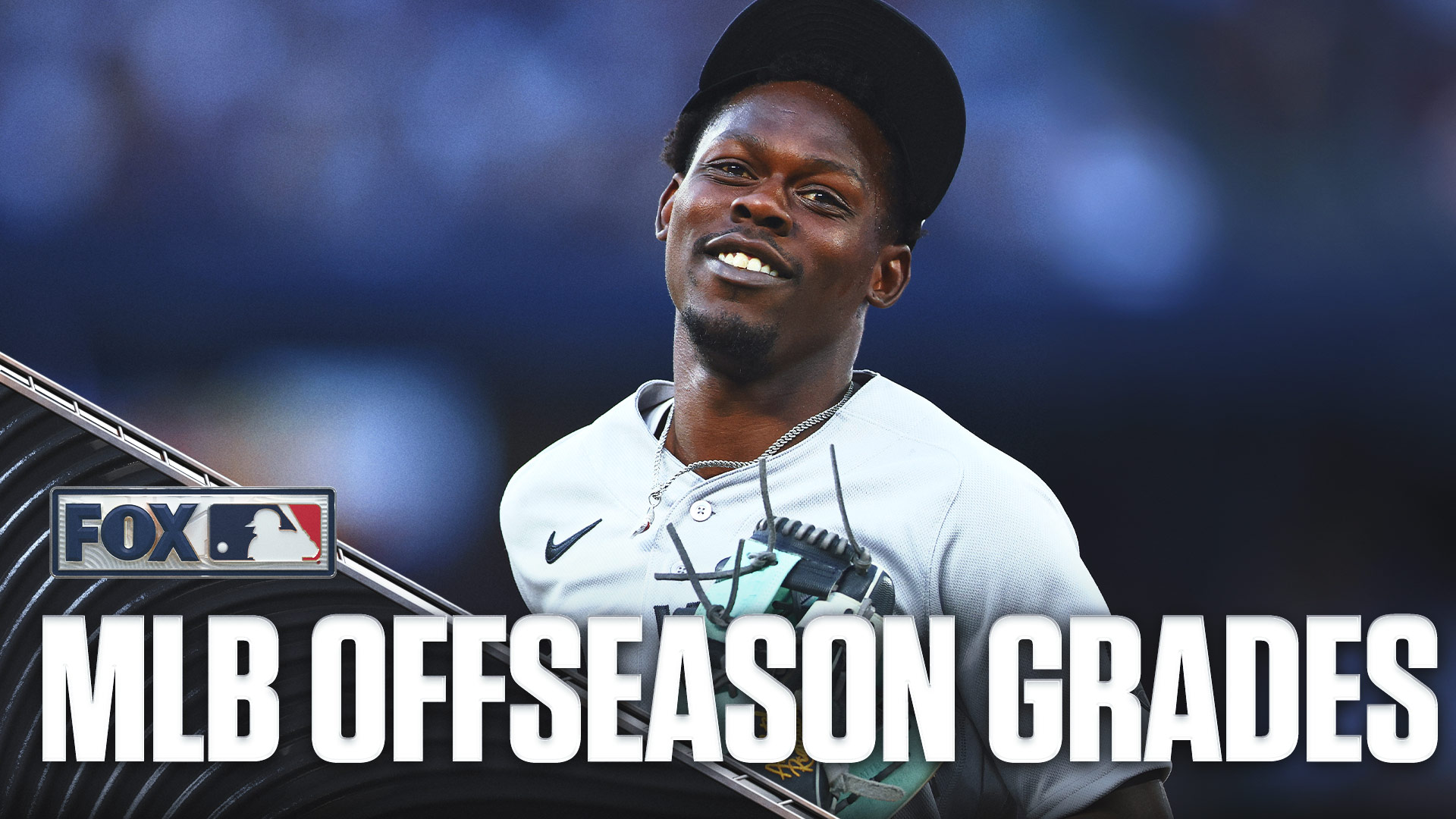
Baseball’s hot stove is turned all the way up now as MLB teams are signing top players and making key decisions ahead of the expiration of the collective bargaining agreement on Dec. 1. What have we seen so far? Jazz Chisholm Jr. is leaving the Bronx for an AL East rival. Two-time Cy Young winner Tarik Skubal is heading to the Mets for $450 million. The Cubs have a new marquee pitcher along with one of Japan's top talents. Expect more players to come off the board and as they do, we're grading those deals and how they impact the teams involved. JUMP TO: Jazz To Blue Jays | Tigers Sign Gausman | Bohm Heads To K.C.| Blue Jays Ink Japan's Taira | O's Get ‘Fastball Freddy'| Japan's Sato Joins Cubs | Cubs Sign Rogers | Skubal's $450M Mets Deal | Dodgers Land Lewis | White Sox Ship Castillo | Garcia To Seattle | Twins Sign Gray | White Sox Sign May | Red Sox Sign Bauers | Braves Sign Phillips Contract: One year, $18.5 million (player option in 2028) Grade: A- Breaking Down The Deal: Kaima Taira was Toronto’s pivot after missing out on Tarik Skubal, but this move for Chisholm might be the more consequential one for a Blue Jays roster that desperately needed more offensive upside. The Blue Jays ranked last in runs scored and home runs last season and went from leading MLB in on-base percentage in 2025 to ranking 26th in the category last season. They also weren’t active on the basepaths, ranking 27th in stolen bases. Chisholm, with his power-speed combo, adds tools that simply didn’t exist otherwise in this Toronto lineup. Chisholm had 41 stolen bases last year — more than twice as many as Andrés Giménez, who led the Blue Jays with 20 steals in 2026. Chisholm also had 19 home runs, which would have ranked second on the Blue Jays behind only Kazuma Okamoto (33). While Chisholm is coming off a disappointing walk year with the Yankees — .711 OPS, 97 OPS+ — his 74 homers over the last three years are tied for the 34th-most in MLB over that span and lead all current Toronto hitters. The Blue Jays needed another impact slugger to pair with Vladimir Guerrero Jr. (or in the event that Guerrero again struggles to find his way). Chisholm, who has at least 19 home runs and 31 stolen bases each of the last three seasons, has that kind of ceiling. With this signing, Ernie Clement would figure to move into more of a utility role. Chisholm excelled defensively at second base last year in the Bronx (+15 outs above average), but the former center fielder also has the ability to move around the diamond if the Blue Jays want to get him work at third base or the outfield. If it doesn’t work out, the risk is minimal, though the deal is more complicated than a typical one-year offer. Chisholm reportedly has a player option in 2028 for $16 million that includes a $1.5 million buyout. If Chisholm declines the player option, it would convert into a $40 million team option.Things would have to go very well for the Blue Jays to pick that up as Chisholm attempts to reestablish his value with this pillow contract entering his age-29 season. If the match goes poorly, the player option shouldn’t be particularly burdensome for the Blue Jays in 2028. It’s a perfectly understandable low-risk, high-reward move coming off a disappointing last-place finish. — Kavner Contract: One year, $25 million Grade: B Breaking Down The Deal: Kevin Gausman is as steady as it gets, representing one of the league’s top workhorses, particularly in the last handful of years. The 35-year-old two-time All-Star has thrown the second-most innings pitched since 2021, trailing only right-hander Logan Webb by fewer than 26 innings in that span. Since the deal is for a single season, there’s no long-term risk for the Tigers. Detroit gets a proven veteran arm without tying up their payroll, and the need for a rotation pickup was clear. Gausman, a finalist for the American League Cy Young award in 2023, will slot into the starting staff alongside Framber Valdez and a mix of other options, including Troy Melton, Jackson Jobe, River Ryan, Reese Olson and Luis Gil. With the addition of a dependable pitcher like Gausman, the Tigers should have plenty of depth to play around with if some arms need to be shifted to the bullpen. After committing $25 million, the Tigers have to hope that Gausman’s down year in 2026 was an outlier rather than an unfortunate trend of things to come. He recorded a 4.51 ERA in 177 innings between the Blue Jays and Cubs, his worst career performance over a full season since 2019. Encouragingly, Gausman maintained his strikeout rate from 2025 and even lowered his walk rate. Contract: Two years, $20 million Grade: B Breaking Down The Deal: One week later, we finally have our answer on who will replace Maikel Garcia at third base for the Royals. Alex Bohm, who’s still searching for the high level of production that he’s flashed sporadically throughout his seven-year career with the Phillies, will try to find consistency in Kansas City. The 30-year-old infielder is coming off a down year. Bohm hit .249/.315/.383 (87 OPS+), performing 13% worse than league average at the plate. He was better in the second half, raising his OPS from .632 in his first 90 games of the season to .794 in his final 60 games. Even with the Royals securing their Garcia replacement after they dealt the young third baseman to the Mariners last week, it’s a given that Bohm will be a defensive downgrade in Kansas City. Bohm has played at the hot corner throughout the majority of his career before the Phillies shifted him to first base last season upon the arrival of Luis Arraez. In general, Bohm is not a strong defender. He posted -10 Defensive Runs Saved and -8 Outs Above Average at third base in 2026. Once the Phillies shifted him to first, it seemed like a more forgiving spot for Bohm long-term. But the Royals are set at first base with Vinnie Pasquintino and Jac Caglianone, so Bohm will have to stick to third for now. It will be interesting to see how the Phillies handle their opening at the hot corner. Top prospect Aidan Miller is the long-term solution there, but it would be somewhat surprising if he made the Opening Day roster after missing the majority of 2026 with a back injury. It’s possible infielder Bryson Stott could fill in at third to start the year until Miller is ready at some point in 2027. - Thosar Contract: Five years, $80 million Grade: B Breaking Down The Deal: The bridesmaid Blue Jays once again pursued the top free agent of the class, in this case, ace Tarik Skubal, and made a strong, competitive offer and still lost to a rival team. They licked their wounds and responded 48 hours later by signing Japanese right-hander Kaira Taima, getting in on the flurry of activity in the pitcher market. Taima, 27, is widely considered one of Nippon Professional Baseball’s top pitchers after he successfully returned to a starting role with the Seibu Lions in 2026, going 12-5 and recording a league-leading 1.36 ERA, 0.96 ERA and 141 strikeouts in 146 innings. Taira, who stands at just 5-foot-8 but flashes an upper-90s fastball and an eight-pitch mix, will slot into a Toronto rotation headlined by ace Dylan Cease and right-handers Trey Yesavage and Jose Soriano. He still has to translate last year’s breakout season to the majors, where he has the potential to be a true frontline ace. Prior to the 2026 season, Taira had spent time as a closer, reliever and starter in the NPB. The Jays are expected to give Taira a long runway in the rotation, and they can shift him to the bullpen if need be, with depth starters like Spencer Arrighetti and Cody Ponce ready to step in. The signing further emphasizes Toronto’s involvement in the Japanese market in recent seasons. Last year, the Jays signed third baseman Kazuma Okamoto, who hit .232/.310/.452 (107 OPS+), crushed 33 home runs across 156 games and received down-ballot American League Rookie of the Year votes in his first year in the majors. - Thosar Contract: Five years, $125 million Grade: B Breaking Down The Deal: It’s a good time to be a pitcher. Now that Tarik Skubal has made his decision, the next tier of starters are flying off the board and inking nine-figure deals. This match was an interesting one. The Orioles let Trevor Rogers go, then turned around and signed Peralta for basically the same five-year deal ($1 million more per season). Clearly, they thought more of the latter. Time will tell whether that decision is a prudent one. Rogers is a year and a half younger than Peralta with less mileage on his arm. Peralta has the longer track record of success and has demonstrated a much better ability to post. Over the last four seasons, he has thrown the 10th-most innings in MLB. However, his strikeout rate has steadily declined over that time, down to a career-low 21.4% mark in 2026. He was a model of consistency in Milwaukee, posting a 3.59 ERA over his eight seasons with the Brewers and registering an ERA under 4.00 in each of his final six seasons with the team. In each of his last three seasons in Milwaukee, he made at least 30 starts and struck out at least 200 batters. Then came last year’s roller-coaster of a walk-year that demonstrated both his upside and risk. The question now: Will Peralta look more like he did with the Mets (4.99 ERA in 22 starts) or the Rays (3.25 ERA in 10 starts) going forward? Clearly, the Orioles are banking on the latter. After a dreadful start to his 2026 season, "Fastball Freddy" found his form, his command and some extra velocity down the stretch in Tampa Bay. In August, opponents hit .347 against Peralta’s four-seamer, which averaged 94 mph that month. In September, the pitch was up to 95.4 mph, and opponents hit just .163 against it. He had an 0.79 ERA in his final six starts of the regular season, then recorded a 2.95 ERA in the postseason as a vital part of the AL champion Rays’ rotation. His fastball averaged 96.8 mph in the postseason and reached as high as 99.4. It is crucial to his success — he has thrown the pitch more than 50% of the time every season of his career — and it is now incumbent upon the Orioles to figure out how to get the most out of it, especially as he now gets deeper into his 30s. Otherwise, as his brief tenure in Queens demonstrated, it won’t end well. — Kavner Contract: Six years, $120 million Grade: B+ Breaking Down The Deal: A year after top international slugger Munetaka Murakami surprised many by picking the White Sox in free agency, the latest masher out of Japan is also choosing Chicago — albeit Murakami’s cross-town rivals. The Cubs continue going down the offseason checklist, following up their $120 million agreement with starter Trevor Rogers on Monday night by turning around Tuesday morning and committing $120 million more to Sato, who might be the best bat on the market. The Cubs had holes to fill in the corner outfield with Seiya Suzuki and Ian Happ both reaching free agency. Sato was primarily a third baseman for the Hanshin Tigers in NPB, though many evaluators figured he might need to move to the outfield in his transition to MLB. That seems to be the likeliest course of action now, with Alex Bregman occupying the hot corner and Michael Busch at first base in Chicago. Having MVP Pete Crow-Armstrong next to him should mitigate some of the defensive concerns. Regardless, though, it’s the bat that the Cubs are buying. Sato’s powerful left-handed swing and propensity to swing and miss will draw obvious comparisons to Murakami, who launched 35 home runs in his first season state-side while also striking out more than 35% of the time. Sato slugged 40 home runs and was named Central League MVP in 2025. He homered another 39 times in 2026 and won the Triple Crown while being named MVP again. Sato isn’t the same three-true-outcome hitter as Murakami — he is a more aggressive swinger with better bat-to-ball skills — but his high whiff rate and low walk rate present risks. Still, it’s rare to find a 27-year-old with this kind of power on the market, and the Cubs, who had the fourth-lowest whiff rate in MLB last season, should be able to withstand some of those issues. Sato will add both upside and youth to an offense that could now again be one of the best in the game. - Kavner Contract: Five years, $120 million Grade: B Breaking Down The Deal: Rogers was considered among the top arms available on the market behind Skubal, and his new deal reflects that. It's not a surprise where he landed. The Cubs have to remake their rotation with Matthew Boyd, Shota Imanaga, Kevin Gausman, Clay Holmes and David Peterson all reaching free agency, and this move is a start. It's a hefty price to pay — in addition to the nine-figure commitment, the Cubs will lose their second- and fifth-highest draft selections since Rogers has a qualifying offer attached — so the Cubs are likely hoping the 29-year-old will be more than a mid-rotation arm. While he doesn't have the velocity or swing-and-miss stuff of a typical high-end starter, there are reasons to believe that Rogers will improve upon his 10-11 record and 4.03 ERA from last season. His expected ERA each of the last two seasons was in the mid-3s, and over spurts he has looked like one of the best pitchers on the planet. In his final 20 starts last season, he had a 2.90 ERA with 119 strikeouts and just 21 walks in 121 innings. The year prior, he was 9-3 with a 1.81 ERA in 18 starts. Despite a four-seamer that sits between 93-94 mph, the pitch is difficult for opponents to pick up. Last year, his hard-hit rate dropped considerably, and he had the fifth-highest chase rate and eighth-lowest walk rate of any qualified starter. The Cubs may try to get Rogers' ground-ball rate a bit closer to where it was in 2024 (46.7%) and 2025 (46.4%) than it was in 2026, when he produced a career low in the category (39.4%), but his terrific command should serve him well in front of the best defense in the sport. It's a gamble — Rogers had an ERA over 4.00 in four of his last five seasons and until last year had never thrown more than 133 innings or made more than 25 starts in a season — but an understandable one as the Cubs look for upside. There's still more work to be done as they look to address their clearest area of need this offseason. — Kavner Contract: Nine years, $450 million Grade: A- Breaking Down The Deal: No real surprises here. It was widely anticipated that Skubal, far and away the best talent available, would sign before the end of the month, set a salary record for a free-agent pitcher and, most likely, wind up on a Mets team willing to go where no other team would in search of an ace. Check, check and check. Skubal’s nine-year, $450 million guarantee is a record both in total amount (surpassing Yoshinobu Yamamoto’s 12-year, $325 million deal with the Dodgers) and average annual value and reportedly includes a full no-trade clause. Not a bad 30th birthday present for the star left-hander. Between Skubal and Juan Soto, who signed for 15 years and $765 million after the 2024 season, Mets owner Steve Cohen has now given out the highest contract ever both to a pitcher and to a position player. Add on Francisco Lindor’s $341 million contract that goes through 2031, and the Mets have more than $1.5 billion committed to three players alone. It speaks to the urgency Cohen clearly feels after missing the playoffs the last two years. Now it’s time to deliver. In last year’s embarrassing 74-win season, Mets starters ranked 23rd in ERA and 22nd in innings pitched. Skubal, who has thrown the fourth-most innings in MLB over the last three seasons and has the second-best ERA among qualified starters over that time, should help in both regards, giving the Mets a star lefty to pair with right-handed phenom Nolan McLean. The Mets can feel good about giving either one of them the ball in October, should they eventually get there soon. Skubal underwent an innovative procedure to remove a loose body from his elbow last May, yet he still threw 158.2 innings between the Tigers and Dodgers — a total that would have ranked second on the Mets’ staff behind only McLean (179.2) — and had the best strikeout-to-walk ratio (6.89) of any MLB starter who threw at least 150 innings. Following the "Skubal scope," the left-hander was back throwing a symptom-free bullpen session just 12 days later and returned to a big-league mound in June. He went just 45 days between starts and exhibited little rust after his return; he had a 2.70 ERA in seven starts before the procedure and a 2.73 ERA over his final 19 starts. The Dodgers traded for the two-time Cy Young Award winner at the deadline, and Skubal produced a 2.61 ERA over 10 regular-season starts in Los Angeles. He then allowed one run in six innings in Game 1 of the National League Division Series and two runs in five innings in Game 1 of the National League Championship Series. Both Skubal and the Dodgers spoke glowingly about their relationship in their brief time together. Ultimately, though, it was a short-term bond. The Mets were more desperate and more in need, and they swooped in, as anticipated, to answer a clear area of need. There’s obvious risk in giving any pitcher — let alone a 30-year-old who has Tommy John surgery under his belt and is coming off a season in which he underwent an elbow procedure — this kind of money. That’s the only reason this grade isn’t even higher. But the Mets have secured the prize of the offseason, and I wouldn’t be surprised if there’s more to come as they try to get back to the playoffs, win their first division title since 2015 and capture their first World Series title since 1986. - Kavner Los Angeles receives: INF Royce Lewis Minnesota receives: RHP Bobby Miller, minor-league C Francisco Espinoza Grade for Dodgers: A Grade for Twins: B Breaking Down The Deal: The Dodgers were in the market for a versatile utility infielder following veteran Miguel Rojas’ retirement, and they found a high-upside answer on the trade market in the form of Lewis, a former No. 1 overall pick who looked like a star in the making a few years ago before injuries derailed his ascension. The same could be said for the pitcher the Twins are getting back in the deal. In 2023, Lewis hit 15 home runs in 58 regular-season games coming off a second ACL tear in his right knee and then proceeded to launch four more home runs in six playoff games. That same year, Miller, a 2020 first-round pick, went 11-4 with a 3.76 ERA and 119 strikeouts in 124.1 innings for the Dodgers and started a playoff game for them. Both were 24 at the time with seemingly bright futures ahead. Instead, injuries have played a major part in prohibiting both players from building on that early success. Lewis dealt with quad, adductor, hamstring and knee issues that limited him to 313 games over the last three years, and he was a below league-average hitter (91 OPS+) over that time. Miller was hampered by shoulder and back issues and has spent the majority of his time since his breakout 2023 campaign in the minor leagues, spending time both as a starter and reliever. Over the last three seasons, he has made 18 appearances for the Dodgers (14 starts) with an 8.30 ERA. He did, however, have a 3.68 ERA in three September outings last season. The move makes sense for both sides as the Dodgers and Twins hope a change of scenery can unlock something in the once-promising prospects, without much downside if they can’t recapture their old form. Lewis, a right-handed hitter, was a non-tender candidate for the Twins. In LA, he can play second base and also give third baseman Max Muncy or first baseman Freddie Freeman the occasional breather against lefties. The Twins needed more big arms on their pitching staff and will hope a healthier season from Miller can get him back on track. Espinoza is a 19-year-old catcher who was signed out of Venezuela in 2024. He hit .296 with no home runs in 32 games in Single-A last year, though he had a 1.126 OPS with three home runs in 14 games in the Arizona Complex League. - Kavner Colorado receives: RHP Luis Castillo and RHP Davis Martin Chicago receives: LHP Sean Sullivan and minor-league C Douglas Veliz Grade for Rockies: B- Grade for White Sox: Incomplete Breaking Down The Deal: This one came as a surprise, considering the White Sox just added Dustin May to try to bolster a rotation that was a weak spot last season. Now they’re taking two starting pitching options away. It’s an acknowledgment of the mistake they made when they traded for Castillo at last season’s deadline, a move that seemed risky for a White Sox team that needed more reliability from its starting pitchers. At the time, Castillo had a 5.06 ERA, the lowest strikeout rate of his career, concerning underlying numbers and a contract few would have been willing to take on. The White Sox did it anyway, getting some salary relief by sending reliever Seranthony Dominguez back to Seattle along with a legitimate prospect in Boston Smith. It all ended badly, as many feared, with Castillo registering an 8.42 ERA over nine appearances in Chicago and losing his spot in the White Sox rotation. Now, to move Castillo’s $22.75 million salary, they had to include a valuable big-league starter in Martin. Getting off the Castillo contract probably deserves a C here, but for now it gets an incomplete because this grade is entirely dependent on what the White Sox do with those savings. Neither Sullivan, a left-handed pitcher who debuted last year for the Rockies, nor Veliz, a 17-year-old catcher out of Venezuela who’s more of a dart throw, are particularly highly-regarded prospects. The White Sox now must meaningfully upgrade the rotation with pieces better than Castillo and Martin. The Rockies were going to have their hands full convincing starting pitchers to go to Colorado on the open market, so it’s possible the additions of Castillo and Martin were better than anything they could have done in free agency. Castillo is coming off the worst season of his career and just allowed the highest pulled fly ball rate of his career — not a great sign as he heads to Coors Field! — but he is a three-time All-Star who had produced an ERA under 4.00 in seven straight seasons before his 2026 implosion. The bigger get is Martin, who had an All-Star caliber first half for the White Sox (9-4, 3.41 ERA) before free-falling in the second half (0-4, 5.12). Martin’s 45.1% hard-hit rate last year could spell trouble in Colorado, but he finished the year with a 3.95 ERA and he represents an upgrade for a Rockies pitching staff that needs all the help it can get. - Kavner Seattle receives: 3B Maikel Garcia, RHP James McArthur and a minor league reliever Kansas City receives: RHP Bryce Miller, LHP Jose Ferrer and RHP Logan Evans Grade for Mariners: A- Grade for Royals: C Breaking Down The Deal: For years, we have been waiting for the Mariners to trade away someone, anyone, from their gigantic reserve of pitchers to help address some of their immediate needs. Mariners president of baseball operations Jerry Dipoto made it clear at November's GM Meetings that the club’s biggest priority this offseason was to improve their defense, particularly on the left field of the infield. Garcia is one of the best defensive third basemen in the league. He had a down year offensively this past season, when he was limited to just 82 games after dealing with multiple injuries. Garcia is still just 26 years old, and in a healthy year, he should be expected to replicate his 2025 All-Star season, when he hit .286/.351/.449 (121 OPS+). So, for Seattle, this trade makes sense in its efforts to win now and repeat the deep postseason run it enjoyed in 2025. The Mariners have needed an everyday bat for a while now, and their surplus of arms made this deal possible. Garcia headlines a three-player package that also includes a pair of relievers, with McArthur having some closing experience with subpar results. Even despite losing Miller to the Royals in this trade, the Mariners still have a solid rotation led by Logan Gilbert, Bryan Woo and George Kirby. Losing Ferrer hurts Seattle, but Dipoto should be able to beef up his bullpen in other ways this winter. As for the Royals’ end of this, I have some questions. Who’s going to play third base with Garcia out of the picture? And why trade the young franchise cornerstone Kansas City just signed to a five-year extension less than a year ago? If the bottom line for the Royals is that they needed pitching help, there are multiple mid-rotation starters available in free agency this offseason, and they wouldn’t even need to break the bank to shore up the rotation while also keeping Garcia. Take, for instance, free-agent right-hander Michael Soroka. The Athletic projected Soroka to land a three-year contract in the range of $54 million. Soroka is even coming off a better season than Miller, who dealt with elbow-related injuries in 2026, which led to a dip in performance and even a demotion to the bullpen in the second half of the season. Even though Kansas City did well to acquire three pitchers in one trade, it seems like the Royals could’ve addressed their lack of arms by spending some money, without trading away their third baseman of the future. — Thosar Contract: Two years, $55 million (including an opt-out) Grade: B+ Breaking Down The Deal: One way to help a bullpen in need? Get a standout starter who doesn’t need much assistance in the middle innings. Gray is coming off a stellar season in Boston in which he went 18-5 with a 2.72 ERA and finished fifth in American League Cy Young voting. And, as he will tell you, he was particularly good the longer a game went on. "I think I’m the best pitcher in the American League going through the order the third time," Gray said while frustrated after getting pulled with two outs in the fifth inning of Boston’s Game 2 wild-card loss to the Yankees. "I think that’s a fact." Indeed, Gray was exceptional last season against opponents the third time through the order, holding them to a .180/.235/.280 slash line in those situations. That ability should be especially helpful to the Twins, who have yet to address a bullpen that ranked in the bottom five in MLB in ERA and WHIP. While there is risk in giving multiple years to a 37-year-old — especially one whose strikeout rate has dipped from 30.3% in 2024 to 26.7% in 2025 and 21.8% in 2026 — this signing could help turn the Twins’ rotation into a real strength if Pablo López returns from Tommy John surgery looking like himself again. It’s also a positive sign that the Twins, after years of cutting payroll, will take necessary steps to try to contend in a winnable division. Gray, who was an All-Star with the Twins in 2023, has already demonstrated his ability to succeed in Minnesota, and his extensive pitch mix could allow him to continue succeeding deep into his 30s despite the red flags with his whiff rate. He has also been a model of reliability, having thrown more than 160 innings each of the past four seasons. The Twins still need to add relief help, but bringing back catcher Ryan Jeffers and adding Gray is a strong start to free agency. - Kavner Contract: Three years, $52.5 million Grade: C+ Breaking Down This Deal: The White Sox needed to stabilize their rotation this winter after getting the fewest innings from their starting pitchers of any team in MLB. May provides depth to the group as a high-upside mid-rotation arm, though his injury history and inconsistencies on the mound present risk for a team that needs innings and reliability. May’s 145 innings last season between the Cardinals and Brewers represented a career high. He demonstrated his high ceiling with a complete-game shutout against the Padres on June 15, and the eventual World Series champions thought highly enough of May’s tools to make him their main pitching addition at the deadline after he posted a 4.38 ERA in 22 starts in St. Louis. But his numbers dipped in the second half in Milwaukee. May had a 5.65 ERA in 10 regular-season starts with the Brewers and a 5.73 ERA in five playoff appearances. His fastball velocity (96.9 mph), good extension off the mound using his 6-foot-6-inch frame and better-than-average strikeout rate, walk rate and overall stuff give reason to believe the 29-year-old’s best could still be ahead. But this was a rather significant commitment given his actual performance to this point, and I expected the White Sox to be shopping a tier above on the starting pitching market to address their biggest need. Perhaps that still happens. - Kavner Contract: Four years, $58 million Grade: B Breaking Down This Deal: Never give up, kids. A couple years ago, Bauers was considering retirement. Now look at him. Of the eight players given the one-year, $23.15 million qualifying offer, Bauers seemed perhaps the likeliest candidate to accept. After all, if he produced at the same level again next season, that would make more teams willing to believe his breakout and allow him to cash in again in 2028. Instead, the Red Sox were willing to pounce in their search for power, and the 31-year-old slugger opted for the long-term security of a four-year deal. Boston is banking on Bauers building off his career year in Milwaukee, a season in which he ranked seventh in MLB in wRC+ and tied for 10th in OPS and came up clutch in October. There is obvious risk involved. Entering 2026, the journeyman had a career .672 OPS and had never hit more than 12 home runs in a season. Bauers will cost the Red Sox their second and fifth-highest draft selections, and the fit is imperfect. Boston’s best hitter this year was its first baseman, Willson Contreras. Those two now figure to split first base and DH duties, leaving even fewer at-bats available for the surplus of Red Sox outfielders, which might necessitate a trade. But the Red Sox, who finished 26th in home runs and 21st in walks, saw an opportunity to acquire a talent who could help in both areas. The underlying numbers suggest Bauers’ breakout was real, and if he plays the way he did last year for the next four seasons, his $14.5 million average annual salary will look like a steal. — Kavner Contract: Three years, $35 million Grade: B- Breaking Down This Deal: While the team’s more glaring need is starting pitching, the Braves had some work to do if they wanted to maintain one of the best bullpens in the sport with closer Raisel Iglesias reaching free agency. The addition of Phillips, who was one of MLB’s best relievers when healthy over the last six years with the Dodgers, should help. Signing him now also provides the Braves some flexibility as the offseason continues. They could still sign another closer and have Phillips, Robert Suarez or Dylan Lee pitching high-leverage innings, or they could roll with any of those three for the ninth inning while turning their attention to their more glaring needs (starting pitching, shortstop). It also gives them more freedom to decide the role they want for versatile 21-year-old Didier Fuentes. For Phillips, the deal marks a return to where it all began. The 32-year-old was drafted by the Braves in 2015 and debuted with the team in 2018 before being traded to Baltimore. He was released in 2021, signed a minor-league deal with the Rays, got designated for assignment and was claimed by the Dodgers, where he turned his career around, producing a 2.36 ERA with 254 strikeouts and 46 saves in 221 innings over the last six seasons. Phillips returned from Tommy John surgery last season and averaged the highest four-seam velocity of his career. He was also barreled more than ever before — which, in tandem with the highest fly-ball rate and lowest ground-ball rate of his career, led to him surrendering five home runs in 26 innings — but he struck out 33 batters with just six walks, and his stuff looked better as the year progressed. Over the last two months of the season, Phillips had a 2.41 ERA with 24 strikeouts and four walks in 18.2 innings. He then made five scoreless appearances in the postseason. It’s an expensive price for a reliever who might not be their closer and a pitcher who has thrown just 86.1 regular-season innings over the last three seasons. But as long as he is healthy, the addition of Phillips should keep Atlanta’s bullpen a strength. — Kavner
What's Your Reaction?
 Like
0
 Dislike
0
 Love
0
 Funny
0
 Angry
0
 Sad
0
 Wow
0